
Seasick? Here's how you can still enjoy your boating vacation

Many people who are going out to sea for the first time worry about seasickness. The good news is that with a little preparation, the right attitude, and the right tricks, your initial uncertainty will quickly become a minor issue. We'll tell you how to prepare yourself optimally and give you tips on how to enjoy a relaxing boating vacation.
Understanding the causes – why seasickness occurs
Seasickness occurs when the movement of the waves irritates the balance system. Your eyes see calmness, while your inner ear senses movement – these conflicting signals lead to nausea and dizziness. Fortunately, this is usually only temporary: your body usually adapts to the gentle rocking after a short time. The symptoms often disappear on their own as soon as you relax and get into the rhythm of the sea.
Prevention: How to stay relaxed on board
A small snack, plenty of fresh air, and a view of the horizon work wonders. Those who stay at the stern or in the middle of the yacht feel the movements the least.
- Start well rested: A well-rested body reacts more calmly to the movements of the sea.
- Eat lightly: An empty or overfilled stomach is not ideal. Eat a small, balanced meal about an hour before departure.
- Dress warmly: Wind and cold promote nausea. A windproof jacket should therefore always be in your luggage.
- Drink enough: About two liters of water per day will keep you fit and stabilize your circulation.
- Avoid alcohol: Even if partying on board is tempting, alcohol dehydrates you and can make you feel worse.
When the boat rocks: Immediate help for seasickness
Even with good preparation, nausea can sometimes strike. These tricks will help you get it under control quickly:
- Look at the horizon: Focus on a point in the distance—this helps your balance system reorient itself.
- Stay on deck: Fresh air and exercise are the best remedies. Avoid stuffy cabins.
- Use ginger: Whether as tea, candy, or capsules, ginger naturally calms the stomach.
- Acupressure wristbands: These apply gentle pressure to specific points on the wrist and can relieve discomfort.
- Lie down for a moment: A nap often helps to get through the worst phase – the body then adjusts to the movement on its own.
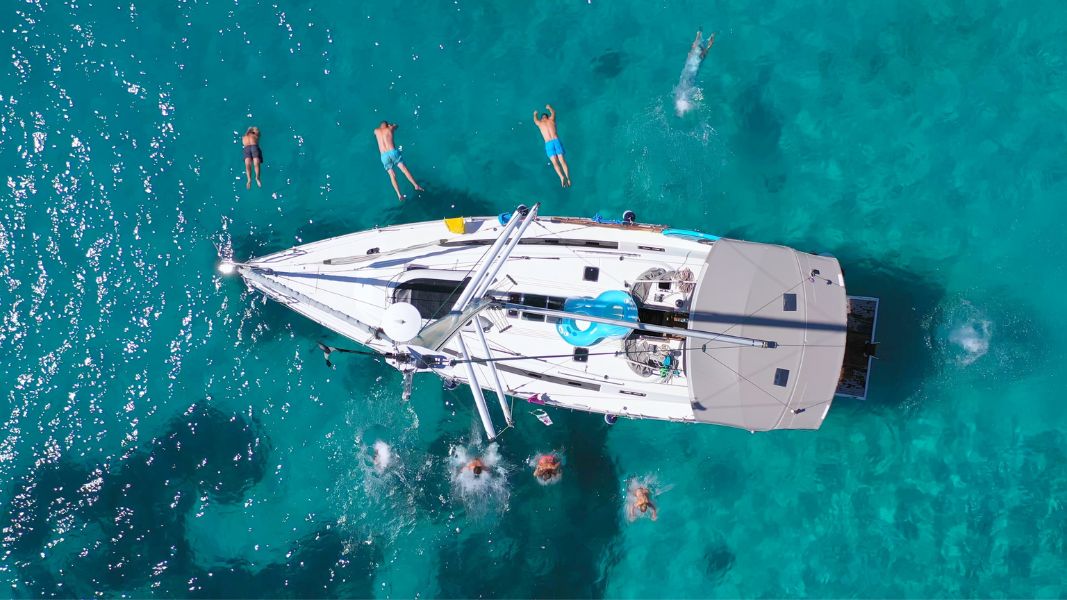
- Jump into the water: And sometimes it's enough to jump into the water for a moment to restore balance to your circulation.
Medication – prepared for all eventualities
If natural remedies are not enough, mild medication can help. Antihistamines (e.g., DRAMINA) are effective against motion sickness. They should be taken with plenty of water about 30 minutes before departure.
It is best to talk to your doctor beforehand to find the right option for you – especially if you are sensitive to medication.
Experience & support from the crew
Most trips take place in sheltered waters and calm bays. With the experience of our skippers, the route is chosen so that all guests feel comfortable. And if anyone does feel queasy, they know what to do. No one is left alone when they are not feeling well. The crew is experienced, gives tips, and provides distractions – from soothing words to a place in the shade with a fresh breeze.
Conclusion
Seasickness is no reason to give up on your dream of a boating vacation. Seasickness can affect anyone – from beginners to experienced sailors. But with good preparation, the right tricks, and a little composure, nothing stands in the way of your dream vacation on a boat. After a short time, your body will get used to the movement, and you can enjoy the sea, the wind, and the feeling of freedom to the fullest.